


Quality Hay
Easy, Affordable, healthy
Take your shopping to the next level by purchasing at Johnson Hay & Ranch. Providing an unparalleled selection of quality hay and products and exceptional customer service, we will always do our best to ensure you find exactly what you have in mind. Check out our collection today.




About Us
The home of your favorite items
From the moment we opened our doors in 1998, Johnson Hay & Ranch has been offering customers the best choices at unbeatable prices. Our brand encourages local famers and the use of organic materials whenever possible, and works hard to keep developing fine-quality hay for your livestock. Find all that you've been looking for—scroll through our vast selection today.

Award-Winning
Only the Best
Hay that has been stored in the barn for a year or more has maintains its nutrient value. As long as the hay has been stored in a dry environment, the only significant loss is Vitamin A, and most of that loss occurred in the first 6 months of storage. The greatest loss of Vitamin A activity occurs right after harvest. The amounts of energy, protein, calcium, phosphorus and other nutrients and minerals remain basically the same after 2 years of storage as they were after the first month or two of storage. With time hay will loose its fresh smell but that does not affect nutrient value. If someone offers you to sell their good quality barn-stored" last year's hay" at a bargain-basement price-take them up on it!
In summary, sorting out fiction from fact and knowing the nutrient requirements of your horses can make selecting the right hay easy. High quality,easily digestible legumes and grass/legume mix hays are ideal for young growing horses and brood mares due to the high protein and caloriecontents. That high protein may be too much for the show horse, though, and in order to increase feed efficiency, a high quality grass hay should be chosen. Be prepared to supplement foals, brood mares and exercising horses with additional calories if the hay is of marginal quality.Pasture potatoes can make do with a quality grass hay. if you do feed the pastured pleasure horse a very high protein hay, you may find a fat horse in a short time frame! The "cutting" doesn't matter nearly as much as the maturity of the hay when it was cut. Learn how to evaluate hay quality by visual scoring and you'll be able to select the right hay regardless of what season it was cut.
So the primary considerations are stage of maturity, leafiness, freedom from musty odor, mold and foreign material - Its not the species of hay but farming management.
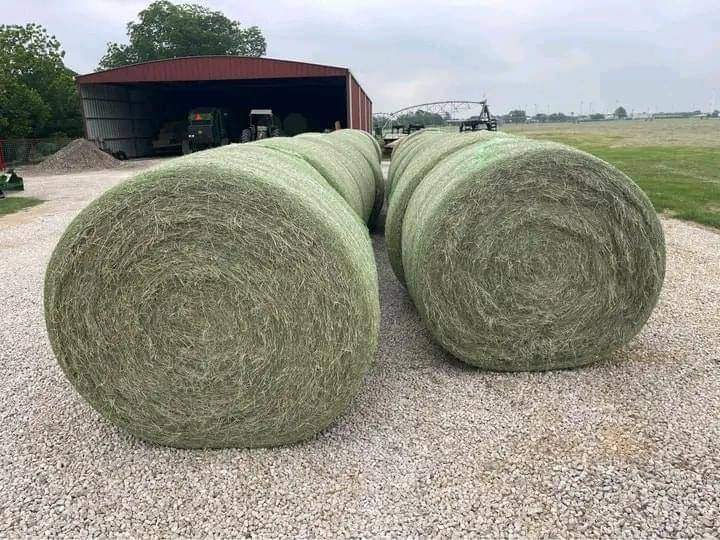
For example, 3 week old bermuda grass hay or alfalfa will have a higher forage quality than 4 week old, greater than 5 week old. . . Nitrogen fertilization directly affects the crude protein content of grass, with maturity at cutting held constant; the higher the fertilization the higher the crude protein ... Further, each forage species has a maximum crude protein level. The major contributing factor is plant/forage maturity at time of cutting. Forage quality decreases as the plant matures ... period!Can horses eat round-baled costal bermuda hay ?The most important factor to consider when looking for hay for your horse is the quality of the packaging. If you don't have the equipment necessary for moving round bales (which can weigh as much as 800 pounds), then we recommend staying with small squares even though rounds are easy there are many important things to consider. If round bales are not in a barn or properly tarped and exposed to the weather, there is considerable waste to consider. The loss of a round bale is 1/3 of the entire outside of the bale. Round bales appear cost effective but often they are not. It depends on your producer and the management of the hay in the fields. Your horse will often only eat the center of the bale and use the rest for bedding or it is urinated on. if you plan to group-feed it in the paddock, make sure you have a round-bale feeder in order to minimize wastage. Perhaps more importantly, though, you need to make sure that it is mold-free. Due to the large size of the bales, combined with a humid climate, development of mold is favored. Even if the bale starts out mold-free, if you have a small number of horses (less than 4), the hay may be out in the elements long enough to develop mold. There is a potential for botulism, a bacteria that favors warm moist environments, to also be present. It is for this reason that you should talk to your veterinarian about vaccinating your horses against botulism if you plan to feed round bales. Also, the longer the hay is exposed to sun and rain, the higher the chances are that your horses will refuse to utilize all the hay. Round bales are often very mature and not a high quality bermuda. This type of hay can be ropy and burn calories as they try to digest it and round bales t are the #1 reason for impaction. Be sure to feed ample alfalfa if you use round bales this will lessen your chances of impaction. Round-baled hay is usually much cheaper to purchase on a weight-basis, but it is not going to be ideal for all management situations. Round bales are a excellent choice for cattle because they will "clean it up" and digest this type of hay. It is very cost effective roughage for that situation.Even though I use this term, Beware of the sign that says "horse quality hay" ... there is no such thing a it's only a marketing term, usually "implying" high (undefined) quality and seldom tested. A sign reading "highly fertilized bermuda grass hay" (or any other type of hay} means next to nothing. A reputable local producer or hay dealer is your horses best friend. Always know the origin of your hay especially on alfalfa because of the Blister Beetle infestation. Alfalfa from the west cost is as safe choice. Feel the weight verses listening to the feed store owner, 10# makes a big difference in the real cost, remember to do the math and be sure you are getting what you are paying for.
2000# / bale weight = ______ bales per ton x bale cost = price per ton.
In general, horses are not as picky as horse owners. But your horse depends on you.20 years in the hay business I have learned there is option and fact and it is often hard to tell the difference.